


Why PECS Matters in Communication
The Picture Exchange Communication System (PECS) is a well-established augmentative and alternative communication (AAC) system designed to help individuals, particularly those with autism spectrum disorder or other significant communication difficulties, learn to communicate functionally. Developed in 1984 by clinical psychologist Dr Andy Bondy and speech pathologist Lori Frost, PECS has since become a globally recognised, evidence-based intervention.
This system is an invaluable communication tool that provides a voice for many non-verbal or pre-verbal learners. However, like any intervention, it is not the end all be all solution. It represents a single, powerful tool that is often best used as part of a wider, holistic communication strategy.
What is the Picture Exchange Communication System (PECS)?
PECS teaches individuals to spontaneously approach another person and exchange a picture card of a desired item or activity to receive it. The entire system is grounded in Skinner’s analysis of Verbal Behaviour and focuses on teaching expressive communication skills.
The main goal of PECS is to establish a fast, self-initiating, and functional communication system. By focusing on communication that is relevant and motivating, learners are taught to initiate communication from the very first phase, which is a skill critical for developing independence and social interaction.
The Six Phases of PECS: Building Blocks of Communication
The PECS protocol is a clear, structured programme divided into six phases that gradually build communication from simple requests to complex sentence structure and commenting.
Phase
Focus
Key Skills
Phase I
How to Communicate
The learner exchanges a single picture for an item they truly want.
Phase II
Distance and Persistence
The learner generalises the new skill by using it in different places, across distances, and with different people, learning to be a more persistent communicator.
Phase III
Picture Discrimination
The learner selects the correct picture from two or more in their communication book to request their favourite things.
Phase IV
Sentence Structure
The learner constructs a simple sentence using a detachable sentence strip, combining a picture of “I want” with the requested item’s picture.
Phase V
Answering Questions
The learner uses PECS to answer direct questions, such as “What do you want?”
Phase VI
Commenting
The learner is taught to use PECS to comment on the environment and respond to questions like, “What do you see?” (e.g., by creating sentences like “I see…”)
PECS: The Positives and Negatives
While PECS is a highly effective, evidence-based tool, it is essential to understand both its advantages and its potential drawbacks to determine if it is the right approach for an individual.
The Benefits: Why PECS is a Powerful Tool
- Promotes Communication Initiation: A major strength of PECS is that it teaches individuals to self-initiate communication rather than waiting for an adult prompt. This spontaneous initiation is fundamental to communication development.
- Reduces Challenging Behaviour: By providing a clear, functional way to express needs and desires, PECS can significantly decrease frustration, which often leads to a reduction in challenging behaviours such as tantrums or aggression.
- Encourages Speech Development: Research has consistently shown that PECS does not delay or hinder the development of speech. In fact, it can act as a bridge, with studies showing that many people using PECS subsequently develop or increase their spoken language.
- Affordable and Accessible: It is a low-tech, relatively inexpensive communication method that does not require complicated equipment. Furthermore, because the pictures are often labelled with words, the communication partner (listener) does not require special training to understand the message.
- Versatile Application: PECS can be used successfully by people of all ages and abilities and can be seamlessly integrated into various settings, including the home, school, and community.
Potential Drawbacks and Considerations
While the benefits are clear, it is crucial to recognise that PECS is not the ultimate communication goal for every learner.
- Concerns over Bodily Autonomy: Some critics raise concerns over the initial use of hand-over-hand prompting in Phase I, arguing it can violate bodily autonomy and may teach dependence on the prompt.
- Limited Spontaneity and Generalisation: If not implemented carefully, the communication taught through PECS can sometimes be limited to the exchange of pictures, leading to less natural and spontaneous interactions. Some individuals may struggle to generalise the skills learned in structured settings to new, unstructured environments.
- Heavy Focus on Requests: While PECS teaches commenting in its later phases, some individuals may stall at the requesting phase (“I want…”), potentially limiting the development of richer, more expressive language functions like sharing or expressing feelings.
- Not a Guarantee of Progress: As with any intervention, some individuals may not make the expected progress with PECS and may ultimately abandon the system. Additionally, the method’s underlying assumption of a language disability, rather than a speech disability, is a point of concern for some practitioners.
PECS Resources from Louise Dawson’s Partners
Creating and implementing PECS requires high-quality, accessible visual aids and a deep understanding of its application. Louise Dawson proudly partners with organizations that provide excellent resources for communication and literacy. We feature exclusive quotes from these expert partners— Widgit, Mighty Writer and Elklan Training—who share their valuable perspectives on how PECS integrates with their tools and aligns with best practice in functional communication.
Widgit
As a leading UK provider of symbol-based communication tools, Widgit is an excellent resource for creating PECS-compatible materials. They offer symbols and symbol-supported resources, visual schedules, and communication boards that help to enhance understanding and access for individuals with Special Educational Needs and Disabilities (SEND).
Widgit symbols are designed to support communication development by providing visual cues that aid understanding and expression. While not specifically designed for use in Picture Exchange Communication Systems (PECS), our symbols can be a valuable tool in helping children generalise their communication skills across different settings. Consistency in the use of symbols is key to reinforcing learning and promoting effective communication. We encourage educators and caregivers to consider how Widgit symbols can complement existing communication strategies, ensuring a cohesive approach that supports the individual needs of each child.
Becca Lynch, Widgit

Mighty Writer
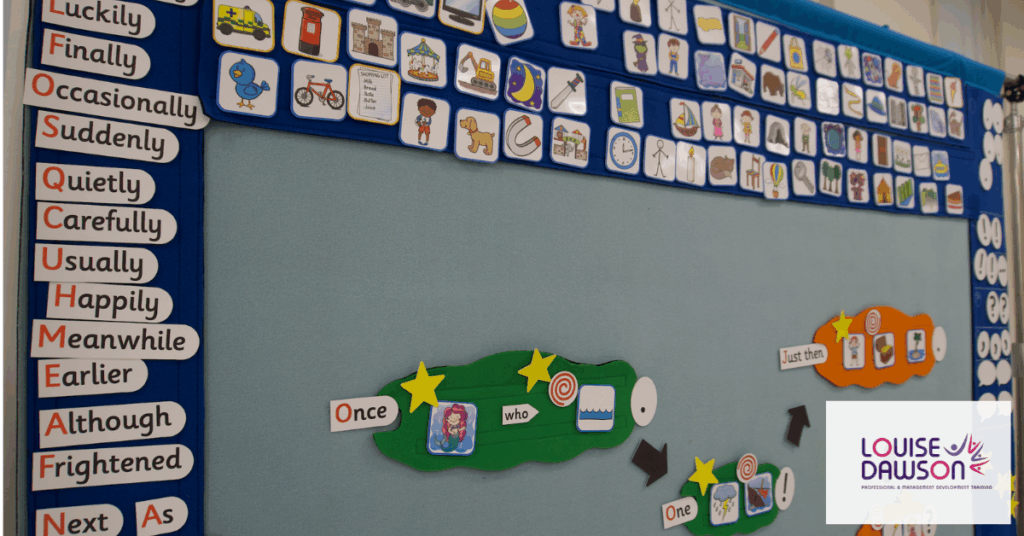
A visual, hands-on literacy tool, Mighty Writer uses colourful mats and word tiles to help children build confidence and structure sentences. While primarily a literacy resource, it supports the visual and structured approach to communication and writing that benefits many learners with SEN, complementing the visual scaffolding offered by systems like PECS.
Teachers report that Mighty Writer is highly effective in supporting early communication learners, especially those using PECS (Picture Exchange Communication System). Its use of visual storytelling tools helps children understand and express ideas more clearly, even if they struggle with verbal communication. The structured visuals promote independence, choice-making, and routine, which are key for learners with speech and language needs. Teachers find that the consistent use of images and symbols in Mighty Writer boosts engagement and confidence in young writers. It is seen as a valuable resource for inclusive literacy development.
David Ralph, Mighty Writer
Elklan Training
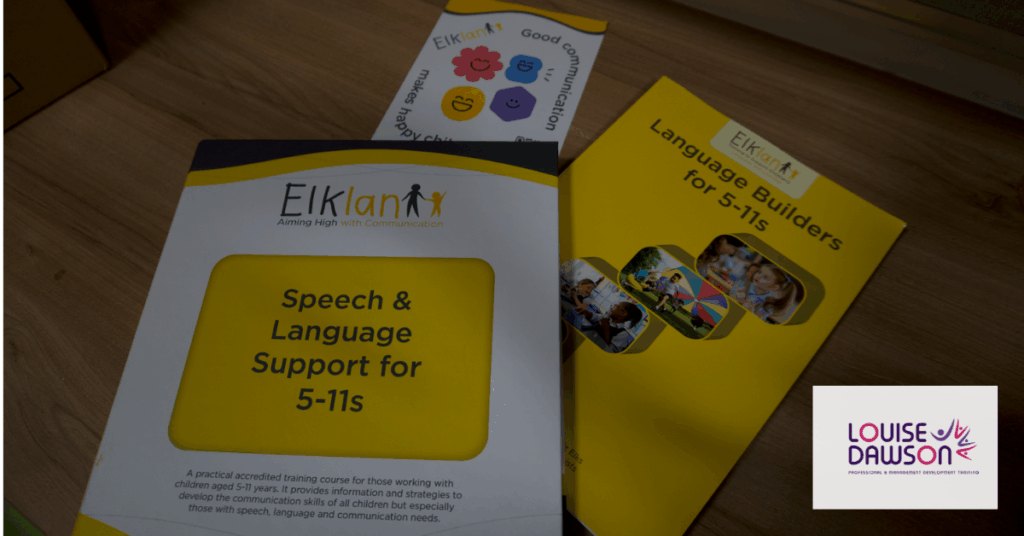
Elklan Training Limited is a highly respected provider of OCN-accredited training for educational staff. Established by Speech and Language Therapists, their core mission is to equip practitioners, including teachers and teaching assistants, with evidence-based strategies to support children with Speech, Language and Communication Needs (SLCN).
Elklan recognises that PECS can be used effectively when a range of picture symbols are understood then accessed to support functional communication. It is important that PECS is modelled and used flexibly across a range of settings. This may include reducing the reliance on prompting, not insisting on a picture being exchanged and accepting pointing to pictures as valid communication. Many options of communication systems and strategies can be implemented and adapted to suit individual strengths and preferences. PECS is one of an extensive range of visual methods that can be recognised, offered and adopted as part of a Total Communication Approach. All communication should be valued when supporting individual needs and differences.
Helen Driver, Elklan Training
Conclusion: PECS as a Foundational Tool
The Picture Exchange Communication System is a powerful and effective functional communication system that has changed lives around the world. It provides a reliable, self-initiated way for individuals to make choices, share information, and connect with others.
However, PECS should be viewed as an important foundational tool—a brilliant starting point—rather than the only answer. For many, it will be the stepping stone to developing spoken language; for others, it will be the most robust form of communication they use. By understanding both its considerable strengths and its limitations, parents and professionals can ensure that PECS is implemented as part of a flexible, neurodiversity-affirming approach that respects the individual’s autonomy and supports their personal communication journey.